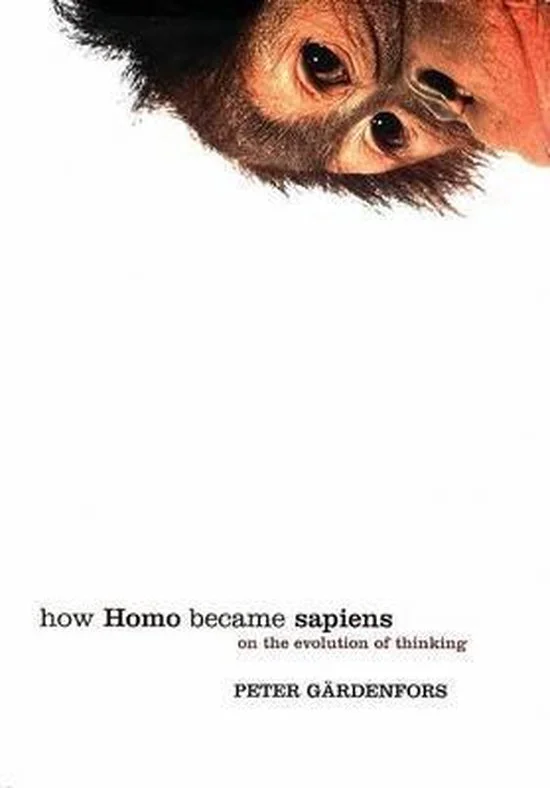
Beschrijving
Embarks on an evolutionary detective story to try and solve one of the big mysteries surrounding human existence – how has the modern human being’s way of thinking come into existence. Full of humorous insights, this book is intended for students in psychology and biology, and accessible to readers of popular science.
Our ability to ’think’ is really one of our most puzzling characteristics. What it would be like to be unable to think? What would it be like to lack self-awareness? The complexity of this activity is striking. ‘Thinking’ involves the interaction of a range of mental processes – attention, emotion, memory, planning, self-consciousness, free will, and language. So where did these processes arise? What evolutionary advantages were bestowed upon those with an ability to deceive, to plan, to empathise, or to understand the intention of others? In this compelling new work, Peter Gardenfors embarks on an evolutionary detective story to try and solve one of the big mysteries surrounding human existence – how has the modern human being’s way of thinking come into existence. He starts by taking in turn the more basic cognitive processes – such as attention and memory, then builds upon these to explore more complex behaviours, such as self-consciousness, mindreading, and imitation. Having done this, he examines the consequences of \